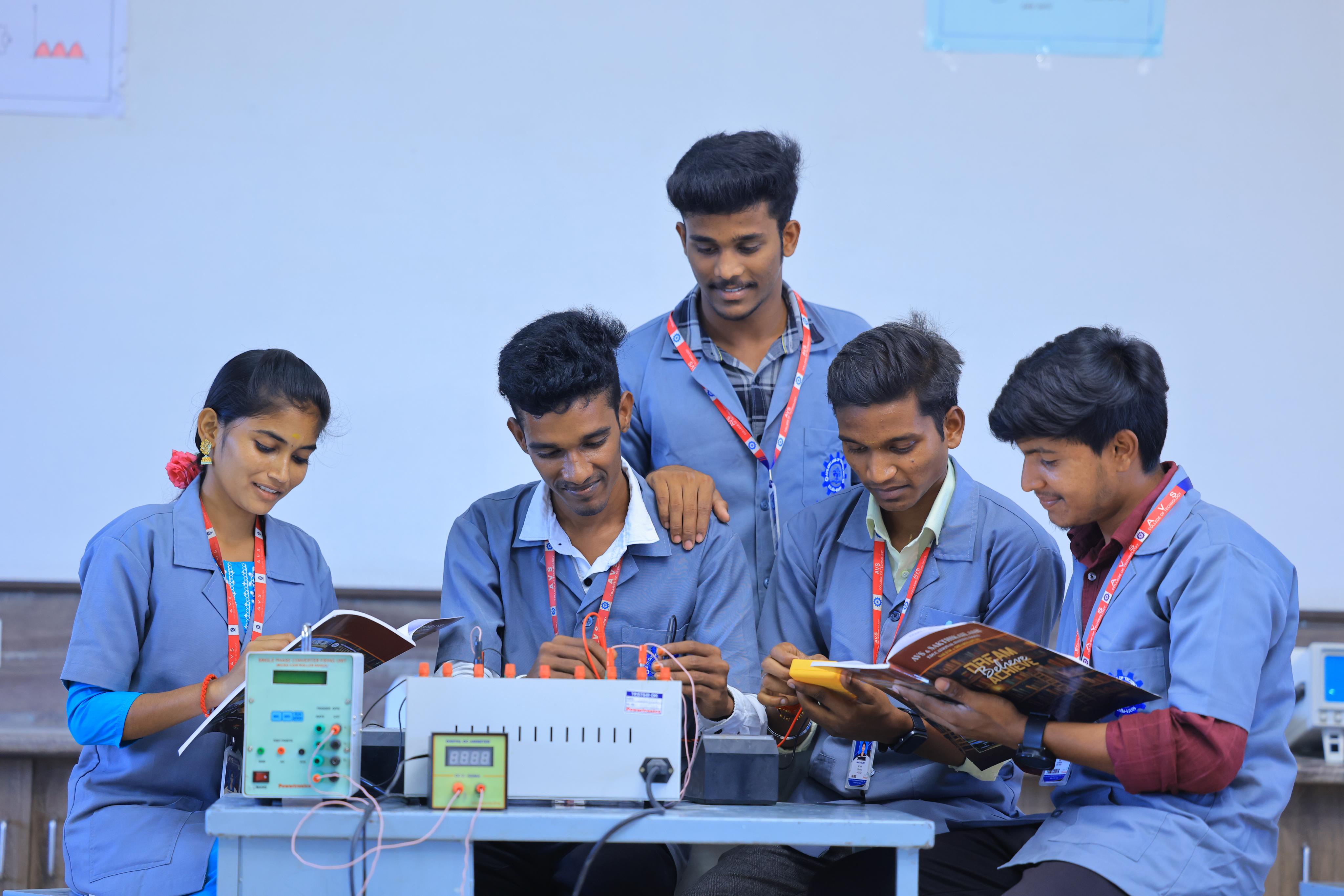
M.E – Applied Electronics

The Master of Engineering (M.E) in Applied Electronics at AVS College of Technology is a two-year postgraduate program designed to provide in-depth knowledge of advanced electronic systems, communication technologies, and embedded solutions. The program is approved by AICTE and affiliated to Anna University, Chennai.

Program Overview

The program focuses on the design, analysis, and implementation of advanced electronic and communication systems. It equips students with expertise in embedded systems, signal processing, VLSI, and communication networks, preparing them for research, development, and specialized engineering roles.

Vision

  • Endeavor in the direction of producing world class engineers who will continuously innovate advancement in Electronics and Communication Engineering.
  • To produce globally competent engineers with strong technical knowledge and ethical values.

Mission

  • To evolve as a Center of Superiority both in Academic and Research by providing Complete Eminence Technical Education.
  • To scrutinize a problem and be able to solve it in competent manner.
  • To build self-confidence and knowledge to start new business activities and show entrepreneurship skills.

Faculty Members

S.No Name Designation
1 VANITHAMANI R PROFESSOR
2 GAYATHRI T ASST PROFESSOR
3 LISHA L ASST PROFESSOR

Program Educational Objectives (PEOs)

  • PEO 1: Apply advanced knowledge of electronics, communication, and embedded systems to analyze, design, and develop complex electronic solutions for industry and research applications.
  • PEO 2: Build successful careers in embedded systems, VLSI design, communication technologies, research and development, and academia.
  • PEO 3: Demonstrate research aptitude, innovation, and problem-solving skills to address emerging challenges in electronics and communication engineering.
  • PEO 4: Exhibit professional ethics, leadership qualities, effective communication, and lifelong learning to adapt to rapid technological advancements.

Program Outcomes (POs)

  • PO1 – Advanced Engineering Knowledge: Apply advanced mathematics, electronics, and engineering principles to solve complex and research-oriented electronic engineering problems.
  • PO2 – Problem Analysis: Identify, formulate, and analyze complex electronic and communication system problems using advanced analytical and computational techniques.
  • PO3 – Design and Development of Solutions: Design and develop advanced electronic systems, embedded solutions, and communication networks that meet specified technical and societal requirements.
  • PO4 – Research and Investigation: Conduct independent research involving literature survey, experimentation, modeling, and data interpretation to derive valid conclusions.
  • PO5 – Modern Tool Usage: Select and apply modern software, simulation tools, and hardware platforms for design, analysis, and implementation of electronic systems.
  • PO6 – Ethics and Professional Responsibility: Apply ethical principles and professional standards while addressing safety, legal, environmental, and societal issues related to electronic systems.
  • PO7 – Communication and Teamwork: Communicate effectively through technical reports, seminars, and presentations, and function efficiently as an individual or as part of multidisciplinary teams.
  • PO8 – Lifelong Learning: Recognize the importance of continuous learning and adapt to evolving technologies in electronics and communication engineering.

Programme Specific Outcomes (PSOs)

  • PSO 1: Design and implement advanced embedded systems and real-time applications using microprocessors, microcontrollers, and embedded platforms.
  • PSO 2: Apply concepts of VLSI design, digital signal processing, and communication systems to develop efficient and reliable electronic solutions.
  • PSO 3: Conduct research-oriented projects and dissertations leading to innovative solutions, publications, or contributions to industry and academia.

Curriculum Highlights

  • Advanced Digital Signal Processing
  • Embedded Systems Design
  • VLSI Design and Technology
  • Advanced Microprocessors and Microcontrollers
  • Digital and Wireless Communication Systems
  • Control and Instrumentation Systems
  • Image and Video Processing
  • Research Methodology

Students undertake laboratory work, technical seminars, and a project-based dissertation focused on real-world applications.

Career Opportunities

  • Embedded Systems Engineer
  • Electronics Design Engineer
  • VLSI Engineer
  • Communication Engineer
  • Research and Development Engineer

Graduates may also opt for doctoral programs, academic careers, or research roles in electronics and communication industries.